Sustainable Pest Control: Top Bio-Insecticides Used in India
Indian farming is moving into a new phase. Crop protection is not only about killing pests anymore. Many farmers now want pest control that matches Integrated Pest Management, keeps the crop healthy, and cuts down on extra spray use. Because of this, people are paying more attention to biological options, plant-based actives, and pest control products that can fit into safer crop protection plans.
Still, there is a key point. A product can be sold as “sustainable” or "eco-friendly," and yet it may not be a true bio-insecticide. Bio-insecticides usually use microbes, plant materials, or other substances made in a biological way. At the same time, some products that are used for pest control are conventional insecticides. Those can still fit into IPM, but only if they are chosen well and used the right way.
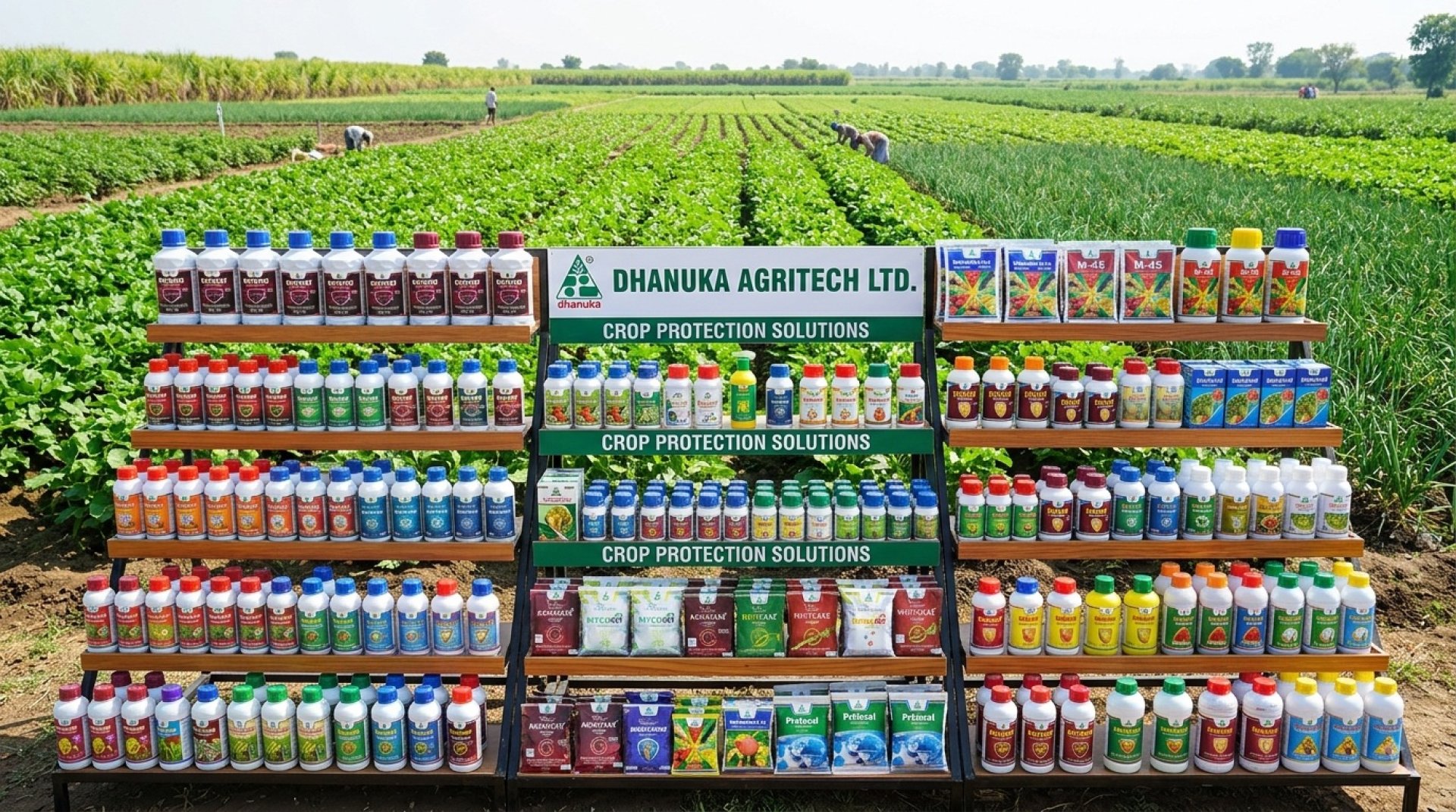
Dhanuka Agritech, which is the Insecticide Company, shows this split in its lineup. It has a Biologicals set with products like Nemataxe, Whiteaxe, Sporenil, Downil, Omninxt, and Myconxt. It also has a separate insecticide range. That insecticide list includes Dhanulux, Cover GR, Caldan 4G, Deva Shakti, Largo, and Omite. So, what does pest control that is truly sustainable look like at the farm level?
Identifying the pest, rather than the product, is the starting point
A good crop protection plan is one based on sustainable practices. To achieve that, you need to be accurate in determining the pest that is the real issue.
A grower should ask themselves:
- What is the pest that's ruining the crops?
- What stage of pest development is the dominant one here?
- To what extent is the pest spread?
- What part of the plant is being attacked?
- Would there be cases of the beneficial insects already being used?
By starting the identification process at the level of the pest, we avoid unnecessary use of pesticide sprays and get better control with targeted treatments.
IPM is based on merging pest control with other methods and aims at keeping pests at a level that does not cause economic losses rather than trying to exterminate all bugs.
Biological substances and selective insecticides can be integrated with other control methods, especially cultural, mechanical and biological ones, at that level.
Six Crop-Protection Products Worth Knowing
These products are included because they represent different ways of modern pest control and are part of Dhanuka Agritech's insecticide product line. None should be considered as bio-insecticides alone.
1. Dhanulux, Broad-Spectrum Crop Protection
Quinalphos 25% EC is the key ingredient of Dhanulux, an insecticide formulated as an organophosphate. Dhanuka says that it is a contact and stomach killer insecticide and is used to control both chewing and sucking insects as well as mites.
Cotton, paddy, soybean, and brinjal are some examples of crops on which it is effective. In each case, different pest species are targeted.
From a sustainable farming viewpoint, it is recommended that the use of such crops should be only after a thoroughly thought-out pest management plan and not just as regular blanket applications.
2. Cover GR Targeted Protection for Paddy and Sugarcane
Cover GR has Chlorantraniliprole/Rynaxypyr 0.4% GR as the active ingredient. Dhanuka describes this product for stem borers and leaf folders in paddy and for borers in sugarcane as a product of broad-spectrum insecticides.
The way this insecticide works means it is targeted at insect muscle receptors. The manufacturer also points out that the formulation is safe for non-target arthropods, which makes it a useful pesticide in an integrated pest management program.
Farmers who have borer problems can take care of them by adopting targeted pest-control products, which can lead to the implementation of a more accurate pest-control strategy.
3. Caldan 4G A Paddy-Focused Option
Caldan 4G contains Cartap Hydrochloride 4% G, which is a neurotoxin analogue insecticide. It is said that its modes of action contact, systemic, and stomach are provided to the insect so that they can be defeated. It is used to control pests like stem borers and leaf folders in paddy.
If you like the feature of Caldan4G, which is the fact that it is very suitable for use in an IPM program and is resistant to program resistance, then it must mean you are a fan of sustainable pest control. This also shows a significant sustainable pest control idea: different modes of action should be rotated or mixed to keep a farmer from being overdependent on one chemical alone.
4. Deva Shakti, Managing Chewing and Sucking Pests
Devadeva Shaktic contains Lambda-cyhalothrin 5% EC, a synthetic pyrethroid. The crops on which the pest control product can be applied as per Dhanuka include cotton, paddy, brinjal, tomato, chili, pigeon pea, etc., depending on the pest.
A farmer should use Deva Shakti in an integrated pest management (IPM) program based on the pest problem at the time, plant growth stage, application directions, and the product's effectiveness on good bug species.
The main takeaway from all of this is that farming in an environmentally conscious manner is not going to involve an immediate total stop of regular crop protection products. Rather, it involves a more precise use of the products: which product, when, and for which pest are the main questions!
5. Largo, A Biologically Derived Insect-Management Tool
One of the unique aspects of this product line is the fact that Largo has a very special history. Its active constituent is Spinetoram 11.7% SC, which is part of the spiosin family. According to Dhanuka, its active ingredient was obtained by first fermenting with Saccharopolyspora spinosa, a soil bacterium, and then carrying out a chemical modification of the product obtained.
Largo is effective against pests like thrips and lepidopteran insects in a variety of crops. With its ability to move to both layers of a leaf and contact and stomach actions, it becomes a great targeted pest management product. Alongside Dhanuka, Largo's pest management program is also being positioned as an integrated pest management (IPM) program.
As a by-biologic product, this product, in fact, is especially significant when one considers the current trend that is more inclined towards diverse pest-control technologies as an overall solution.
6. Omite, When Mites Become the Problem
The reason the pests are called pests does not always mean that they have insect morphology. The product Omite with propargite 57% EC as the active ingredient is a miticide/acaricide intended for the specific use against mith management.
Contact and fumigant activity is the mode of action of Omite. Mites in crops like brinjal, chilli, apple and Tea are effectively controlled by the use of Omite alone or in combination.
It is important to distinguish these two kinds of pest treatments because using a formula that you are expecting to work on insects may not actually do so when you find out that the target pest is not only a pest in terms of its harmful effects; it is also a mite. Sustainable pest control is still going to require correct identification of the pest that is the problem.
Conclusion: Building a Smarter Future for Indian Agriculture
Pest control in India will probably move toward using several methods together. People may rely on living-based options, more precise insect killers, and regular field checks. Integrated Pest Management will likely play a bigger role too. Using just one type of product may not be enough.
Different brands and products show this shift. Dhanulux, Cover GR, Caldan 4G, Deva Shakti, Largo, and Omite each fit different crop problems. They do not all solve the same pest issue. At the same time, Dhanuka’s biologicals line makes it clear that biological solutions are now part of a bigger crop care mix.
If a company wants to explain complex farm technologies in a simple way, FODUU stands out. It focuses on digital work that feels more like it is built for users. It also creates content-based tools. This helps agriculture brands show their products and methods in a clearer manner. When the online presence is strong, farmers, dealers, and ag experts can find technical details and make sense of them faster.
Also Read: Top Best Bio-Stimulants in India to Boost Crop Yield and Soil Health